
10 Greatest Industrialists of All Time—And What Future Engineers Can Learn from Them
Updated: Apr 9

Industrialists do more than build companies—they reshape how societies produce, move, communicate, and live. From steam engines to smartphones, the modern world has been constructed by individuals who combined technical insight, bold vision, and an ability to turn ideas into scalable systems.
For students interested in engineering, technology, and innovation, studying the lives of great industrialists offers a powerful window into how technical knowledge becomes real-world impact. This article explores ten of the greatest industrialists of all time, presented in chronological order by birth. Together, they reveal how engineering thinking, systems design, and problem-solving have driven progress across centuries.
James Watt (1736–1819)

James Watt stands at the foundation of modern industrial society. Born in Scotland in 1736, Watt was a mechanical engineer and inventor whose improvements to the steam engine helped trigger the Industrial Revolution and permanently altered patterns of production and labor.
While steam engines already existed, they were inefficient, costly to operate, and impractical for widespread use beyond limited applications. Watt’s key innovation—the separate condenser—dramatically increased efficiency by reducing energy loss. This breakthrough made steam power economically viable for factories, mines, and transportation, allowing industry to scale beyond the constraints of water and animal power. His work effectively transformed energy from a localized resource into a flexible, industrial force.
Watt’s influence extended far beyond machinery itself. He helped introduce standardized measurement of power, giving rise to the term “horsepower,” which enabled engineers and entrepreneurs to compare performance and plan systems rationally. He also laid the conceptual foundations of modern mechanical engineering. For aspiring engineers, Watt exemplifies how deep theoretical understanding paired with practical experimentation can unlock entirely new economic systems.
Cornelius Vanderbilt (1794–1877)
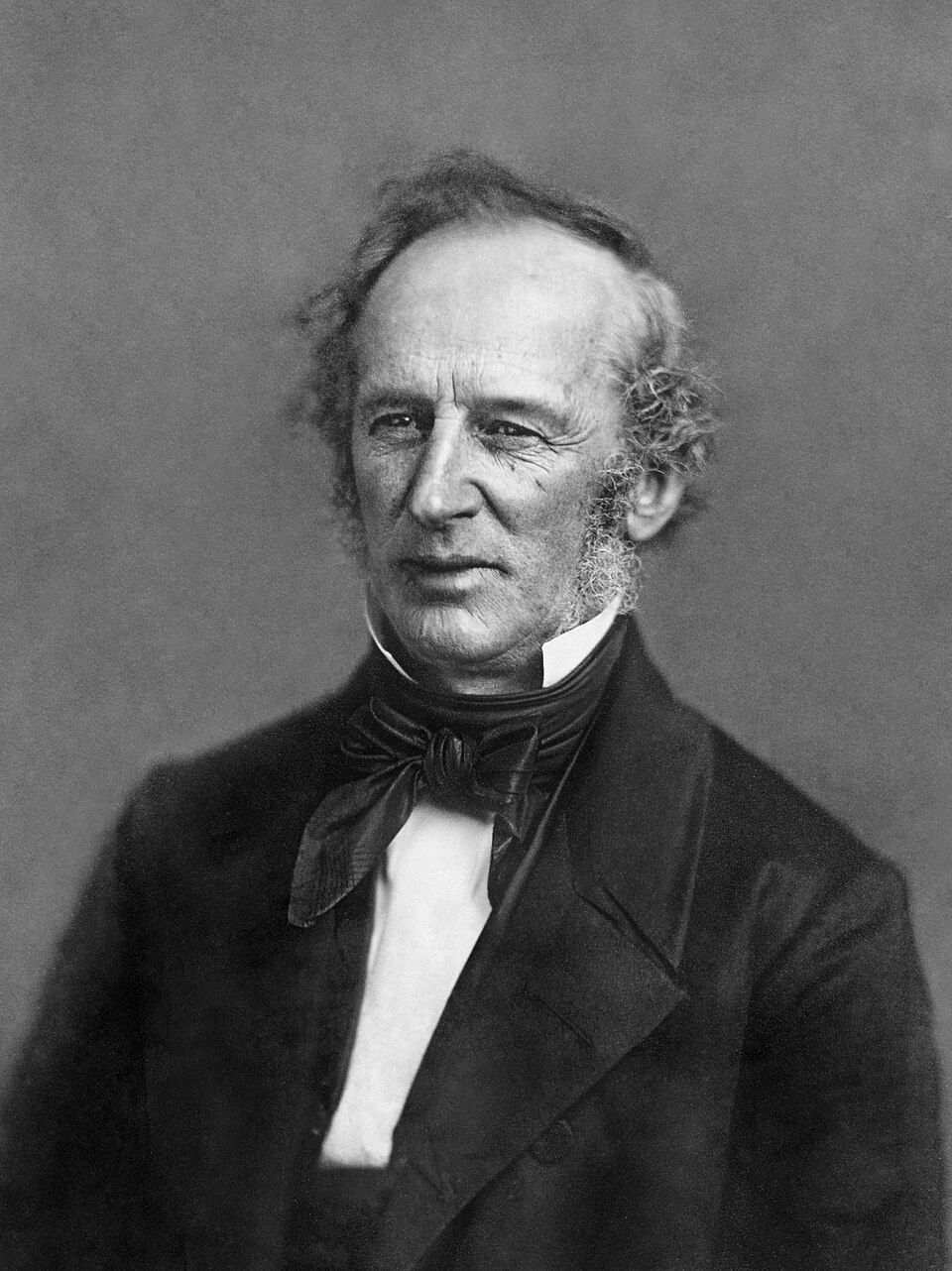
Born in New York in 1794, Cornelius Vanderbilt built one of the greatest industrial fortunes of the nineteenth century by reducing transportation costs, enabling businesses to expand into distant markets and achieve greater economies of scale than possible before. Beginning with steamboats and later railroads, Vanderbilt recognized that the movement of goods and people was central to economic development.
Vanderbilt applied systems thinking long before the term existed. He focused relentlessly on efficiency, scale, and integration—reducing operating costs, improving reliability, and consolidating fragmented transportation lines into cohesive networks. By doing so, he transformed chaotic regional routes into unified systems that connected cities, accelerated commerce, and reshaped the American economy.
Though not an engineer himself, Vanderbilt’s success depended heavily on engineering judgment, infrastructure investment, and logistical optimization. His career demonstrates that large-scale technological systems require not only invention, but disciplined management, data-driven decision-making, and operational excellence.
Isambard Kingdom Brunel (1806–1859)

Isambard Kingdom Brunel was one of history’s greatest engineers and a towering figure of the Industrial Age. Born in England in 1806, Brunel designed bridges, tunnels, railways, and ships that consistently pushed the limits of what engineering knowledge and materials could achieve.
His landmark projects—including the Great Western Railway, the Clifton Suspension Bridge over Bristol, and pioneering transatlantic steamships—combined bold technical innovation with a strong aesthetic sensibility. Brunel believed infrastructure should be both functional and beautiful, a philosophy that continues to influence modern engineering and architectural design.
Brunel’s career also highlights the risks inherent in ambitious innovation. Many of his projects were controversial, expensive, and technically complex, sometimes exceeding budgets or timelines. Yet his willingness to attempt the unprecedented expanded the boundaries of civil and mechanical engineering and demonstrated how progress often requires calculated risk.
Andrew Carnegie (1835–1919)

Andrew Carnegie, born in Scotland in 1835, became the leading industrialist of the steel age by transforming steel production into a highly efficient industrial system. After immigrating to the United States, Carnegie built an empire by applying scientific management, cost control, and technological innovation to manufacturing.
Carnegie aggressively adopted the Bessemer process, which enabled the mass production of strong, high-quality steel at dramatically lower costs. This innovation allowed steel to become the foundational material of modern infrastructure—bridges, railways, factories, skyscrapers, and industrial machinery.
Carnegie’s success illustrates the importance of process optimization and applied engineering at scale. He understood that technological breakthroughs achieve real-world impact only when embedded within efficient systems of production, logistics, and management. Prior to his death Carnegie later became a distinguished philanthropist, donating more than 90% of his fortune to support education and charitable causes.
John D. Rockefeller (1839–1937)

Born in 1839, John D. Rockefeller transformed the oil industry not through invention alone, but through unprecedented mastery of industrial organization, standardization, and process control. As the founder of Standard Oil, Rockefeller constructed a vertically integrated enterprise that refined, transported, stored, and distributed petroleum with a level of efficiency and coordination previously unseen in heavy industry. This achievement came at a critical moment in industrial history, as kerosene and later gasoline replaced dwindling supplies of whale oil, creating urgent demand for reliable, scalable energy sources.
Rockefeller approached petroleum not as a speculative commodity, but as a systems engineering and logistical problem. He emphasized waste reduction, continuous improvement, and technological refinement at every stage of production, from refining techniques to barrel construction and railroad transportation. By standardizing processes and reinvesting aggressively in infrastructure and technology, Standard Oil achieved dramatic cost reductions while simultaneously improving product consistency, safety, and reliability. This disciplined, data-driven approach allowed Rockefeller to outcompete rivals not through technological novelty, but through superior execution. By 1900, Standard Oil controlled approximately 90 percent of the U.S. oil market, making Rockefeller the wealthiest individual in the United States.
Rockefeller’s legacy underscores a central lesson of industrial engineering: transformative impact often arises from optimizing and integrating existing technologies rather than inventing entirely new ones. His methods anticipated modern practices in operations research, supply-chain optimization, and quality control. These principles remain deeply relevant today in fields such as energy infrastructure, large-scale manufacturing, logistics, and sustainability, where efficiency, coordination, and process discipline continue to determine long-term success.
Thomas Edison (1847–1931)

Thomas Edison was one of history’s most prolific inventors and a foundational figure in the development of industrial research and development. Born in 1847, Edison accumulated more than 1,000 patents over his lifetime and played a central role in pioneering technologies that reshaped modern life, including electric lighting systems, telecommunications, sound recording, and motion pictures. Working despite significant hearing loss, Edison combined intense focus with extraordinary persistence, often pursuing thousands of experimental variations in his search for practical, commercially viable solutions.
Yet Edison’s most enduring contribution may have been organizational rather than purely technical. At his Menlo Park and later West Orange laboratories, Edison established the world’s first true industrial research labs—purpose-built environments where engineers, scientists, and skilled machinists collaborated continuously. These teams worked through systematic experimentation, rapid prototyping, and iterative refinement, transforming invention from a solitary pursuit into a structured, repeatable process. Edison understood that innovation could be accelerated by surrounding creative individuals with shared tools, data, and institutional support.
This collaborative and research-driven model became the foundation of modern corporate R&D and remains central to contemporary engineering firms and technology companies. Edison’s career demonstrates how creativity, persistence, and empirical experimentation can be scaled through disciplined research environments, laying the groundwork for the innovation ecosystems that power today’s scientific and technological progress.
Henry Ford (1863–1947)

Henry Ford revolutionized manufacturing by redefining how products are built and assembled. Born in 1863, Ford applied engineering principles not only to machines, but to production itself through the creation of the moving assembly line.
This innovation dramatically reduced production time and costs, making the Model T the first automobile affordable to average consumers. In doing so, it transformed not only personal transportation but also urban life itself—alleviating severe sanitation problems caused by cities’ dependence on tens of thousands of horses.
In 1914, Ford further upended industrial norms by introducing a minimum daily wage of $5 (roughly $20 per hour in today’s terms). Within two years, the policy sharply reduced worker turnover, attracted higher-quality labor, and boosted productivity to such an extent that company profits doubled—helping to popularize what would later be termed “efficiency wages” in labor economics. Together, these innovations reshaped global manufacturing and management, influencing industries ranging from automobiles to electronics and consumer goods.
Ford’s legacy underscores the importance of industrial engineering, workflow optimization, and human-centered design—fields that remain central to engineering education and modern manufacturing strategy.
Akio Morita (1921–1999)

Akio Morita, born in Japan in 1921, was a visionary entrepreneur and engineer who co-founded Sony and played a decisive role in shaping the modern consumer electronics industry. Trained in physics, Morita brought to engineering a rigorous commitment to precision, miniaturization, and reliability, but he was equally distinguished by his insistence that technology must serve human habits, tastes, and everyday experiences. For Morita, technical excellence was inseparable from thoughtful design and intuitive usability.
Under his leadership, Sony introduced a series of groundbreaking products that redefined how people interact with technology. The transistor radio made high-quality audio portable for the first time, while the Walkman revolutionized personal music consumption by placing control directly in the hands of the listener. These innovations did more than create new product categories; they altered daily life, reshaped global media consumption, and set new expectations for personal, mobile technology. At the same time, Sony’s success helped reposition Japan in the global imagination—from a postwar manufacturer of low-cost goods to the world’s leading source of cutting-edge technological innovation by the 1980s.
Morita’s career exemplifies the increasingly global nature of engineering and entrepreneurship in the twentieth century. He understood that innovation required more than technical mastery: it demanded cultural insight, international collaboration, and acute awareness of consumer psychology across different markets. By integrating engineering excellence with market sensitivity and design intelligence, Morita established a model of innovation that continues to influence technology companies worldwide.
Steve Jobs (1955–2011)

Steve Jobs, born in 1955, was a transformative figure whose influence reshaped multiple industries by uniting engineering, design, and software into tightly integrated systems. As co-founder of Apple, Jobs rejected the idea that technology should be driven solely by technical possibility; instead, he insisted that engineering serve clarity, beauty, and human intuition. He pushed teams to eliminate unnecessary complexity, striving for products that felt natural and effortless to use, even when built upon extraordinarily sophisticated technology.
Although not an engineer in the traditional sense, Jobs possessed an unusually deep understanding of technology and an uncompromising standard for technical execution. He was known for demanding that hardware, software, and industrial design function as a single coherent whole. Products such as the Macintosh, iPod, iPhone, and MacBook exemplify this philosophy: beneath their clean interfaces and minimalist aesthetics lay complex engineering achievements—custom silicon, advanced operating systems, and tightly optimized architectures—made accessible to millions of users.
Jobs’ legacy demonstrates how engineering impact is dramatically amplified when technical innovation is guided by visionary product leadership. By insisting that technology be both powerful and humane, he helped redefine expectations for personal computing, mobile communication, and digital media, establishing a model in which engineering excellence and design intelligence are inseparable.
Elon Musk (1971– )

Born in 1971, Elon Musk represents a new generation of industrial leaders operating at the frontier of advanced engineering and applied science. Through companies such as SpaceX, Tesla, and Starlink, Musk has concentrated on solving large-scale technological challenges that span aerospace engineering, energy systems, robotics, and artificial intelligence. His ventures are characterized by ambitious technical goals, long development horizons, and a willingness to pursue solutions that require fundamental rethinking of established engineering constraints.
Musk is particularly notable for his direct, hands-on engagement with engineering teams and his insistence on first-principles reasoning in design and problem-solving. Rather than accepting inherited assumptions, he has encouraged engineers to decompose complex systems into their most basic components and rebuild them for efficiency and performance. SpaceX’s development of reusable orbital rockets exemplifies this approach, dramatically reducing launch costs and altering the economic structure of spaceflight, while Tesla’s advances in electric vehicle powertrains, manufacturing automation, and self-driving technology have accelerated the global transition toward sustainable transportation.
Musk’s career illustrates how contemporary industrial leadership increasingly depends on deep technical literacy and interdisciplinary engineering knowledge. By integrating software, hardware, manufacturing, and systems engineering at unprecedented scale, he has demonstrated how engineering-driven organizations can address challenges once considered impractical or unreachable, setting new benchmarks for innovation in the twenty-first century.
Conclusion: Engineering the Future
The industrialists in this list span nearly three centuries, yet they share a common foundation: the ability to apply engineering thinking to real-world problems at scale. From steam engines to spacecraft, their achievements show how technical skill, creativity, and persistence can reshape society for the better.
For students interested in engineering, studying these titans of industry is more than historical curiosity. It reveals how early exposure to mathematics, physics, design, and research can lead to transformative careers. Today’s grand challenges—from alternative energy generation to advanced manufacturing—demand the same combination of rigorous technical training and bold imagination.
World Scholars Academy’s summer engineering courses and research internships are designed for motivated students who want to explore these ideas early through intensive coursework, hands-on projects, and research-focused learning. By engaging with real engineering problems and developing advanced technical skills, students build a strong foundation for future study and innovation. The next generation of industrialists is already beginning their journey. With curiosity, discipline, and the right academic environment, students can begin engineering the future today.
To learn more about engineering check out our articles on The 10 Greatest Engineers of All Time and the Top 12 Engineering Career Paths.


