
Dream Big: The 10 Most Prestigious Universities in the World

For many high school students, gaining a place at a prestigious university represents the pinnacle of academic achievement. These institutions are not only known for their academic excellence, but also for the top-notch opportunities they unlock, from influential careers and global networks to ground breaking research and innovation.
While global rankings help assess factors such as research output, teaching quality, and international reputation, prestige extends beyond numbers alone. It is shaped by history, selectivity, academic culture, and the lasting impact a university has had on society. For this reason acceptance rates at a prestigious university can be challenging, often falling below 5%, highlighting a competitive admissions process and the exceptional calibre of students.
Year after year, universities in the United States and UK dominate global top-ten lists, particularly Ivy League schools and Oxbridge. Below are ten of the most prestigious universities in the world, each offering an elite education and a globally recognized degree.

1. University of Oxford, UK
Widely regarded as one of the world’s most influential academic institutions, Oxford University is the oldest university in the English-speaking world with teaching dating back to at least 1096. Today, it consistently ranks at the top of global league tables, driven by its research output, academic reputation, and international reach.
Oxford has a strong reputation in the fields of medicine, law, philosophy, politics, and humanities, while also maintaining world-class departments in science and engineering. Its tutorial system, built around intensive, small-group teaching, shapes independent thinking and academic rigor. Students engage directly with leading scholars and develop advanced analytical skills early in their studies. Beyond its teaching model, Oxford’s campus is unique, with colleges, libraries, museums, and lecture halls spread across the historic city. Iconic landmarks such as the Bodleian Library, Radcliffe Camera, and Sheldonian Theatre contribute to a distinctive academic environment steeped in tradition.
Oxford’s influence is reinforced by an extensive alumni network spanning politics, literature, science, and the arts. Notable alumni include scientist Stephen Hawking, author C.S. Lewis, classical economist Adam Smith, fantasy author J.R.R. Tolkien, mathematician Andrew Wiles who solved Fermat's Last Theorem, and eccentric playwright Oscar Wilde.

2. Harvard University, USA
Founded in 1636, Harvard University is the oldest institution of higher education in the US and is known for its breadth of academic offerings and extensive research output. Based in Cambridge, Massachusetts, Harvard’s campus is anchored by the historic Harvard Yard and blends centuries-old architecture with modern research facilities.
Harvard Law School has educated multiple US Supreme Court justices, while the medical school has contributed to major advances in genetics, immunology, and public health. More recently, Harvard has expanded its influence in technology and entrepreneurship, with strong ties to innovation hubs in Boston and Silicon Valley. Its exceptionally large endowment (circa $56 billion in 2025) allows the university to fund long-term research projects, attract leading academics, and offer extensive financial aid to students.
Acceptance rates for Harvard typically range from 3% to 4%, with impressive alumni including lauded economist and social theorist Thomas Sowell, legendary investor Charlie Munger, former US presidents John Adams and John F. Kennedy, poets Ralph Waldo Emerson and T.S. Eliot, psychologist Steven Pinker, and tech pioneers Bill Gates and Mark Zuckerberg.

3. Massachusetts Institute of Technology (MIT), USA
Founded in 1861 in Cambridge, Massachusetts, MIT has played a defining role in shaping modern computing, physics, artificial intelligence, and engineering. Its research culture emphasizes practical problem-solving alongside theoretical excellence, making it an attractive option for students hoping to contribute to global technological advancements.
Aside from top-level engineering and science programs, MIT also offers impressive programs in economics, architecture, and management. The institute’s culture encourages experimentation, entrepreneurship, and interdisciplinary collaboration, which has led to a large number of successful startups and patents originating from MIT. Influential startups include Dropbox and HubSpot, and key patents include RSA encryption for secure internet communications, as well as many patents for biomaterials and drug discovery.
Admission is competitive, with acceptance rates typically below 7%, so an impressive student application is vital. Notable alumni include physics popularizer Richard Feynman, educator Sal Khan of the eponymous Khan Academy, Pritzker Prize-winning architect I.M. Pei, former chairman of the Federal Reserve and key leader in the recovery from the 2008 Great Recession Ben Bernanke, and distinguished philanthropist Charles Koch.
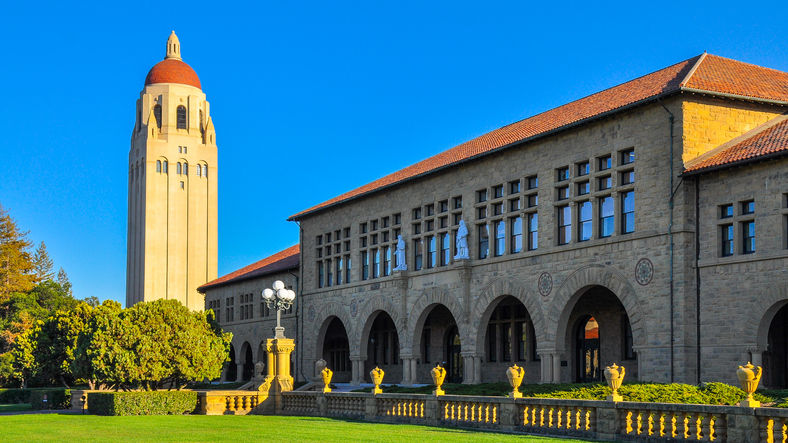
4. Stanford University, USA
Stanford University is synonymous with innovation and entrepreneurship, largely due to its proximity to Silicon Valley. Founded in 1885, the university has become a global leader in technology, business, and scientific research.
Stanford excels across engineering, computer science, biology, medicine, and social sciences, while also maintaining strong humanities programs. Its impact is closely tied to its research ecosystem, which includes facilities such as the Stanford Artificial Intelligence Laboratory (SAIL) and the SLAC National Accelerator Laboratory. Alumni and faculty have played key roles in the creation of companies including Google, Hewlett-Packard, LinkedIn, and Instagram, reinforcing Stanford’s reputation for innovation.
Admission remains competitive (3% to 4%) and notable alumni include Nike founder Phil Knight, writer John Steinbeck, professional golfer Tiger Woods, and many Silicon Valley moguls including the founders of Google Larry Page and Sergey Brin, Paypal and Palantir entrepreneur Peter Thiel, and cofounder of OpenAI Sam Altman.

5. Yale University, USA
Founded in 1701, Yale University is a private Ivy League institution known for its strength in humanities, law, arts, and social sciences. Located in New Haven, Connecticut, Yale combines a deep liberal arts tradition, with influential graduate and professional schools.
Academically, Yale is renowned for its law and drama schools as well as its leading programs in history, political science, and economics. Unlike the intensely competitive culture often associated with elite institutions, Yale is widely known for its collaborative academic atmosphere. The campus experience is also a major draw, from the historic Old Campus to the iconic Sterling Memorial Library, and an extensive global research network covering the arts, sciences, and public policy.
Yale’s cultural and political influence is reflected in its alumni, which includes actors Meryl Streep, Sam Waterston, and Vincent Price, filmmaker Oliver Stone, and Venezuelan freedom fighter and winner of the 2025 Nobel Peace Prize Maria Corina Machado. Other prominent alumni include entrepreneur and inventor Eli Whitney, American Institute of Architects gold medal winner Eero Saarinen, and distinguished Supreme Court Justice Clarence Thomas. Admission remains highly selective, with recent acceptance rates averaging 4% to 5%.

6. University of Cambridge, UK
Renowned for its intellectual intensity and academic tradition, the University of Cambridge has been a center of learning and discovery since its founding in 1209. Consistently ranked among the world’s leading universities, Cambridge blends historic scholarship with cutting-edge research across a wide range of disciplines.
One of Cambridge’s defining features is its picturesque collegiate campus, made up of 31 colleges set among courtyards, gardens, libraries, and historic buildings along the River Cam. This unique environment creates close academic communities while also supporting large-scale, high-impact research across mathematics, engineering, medicine, physics, and life sciences. Cambridge has been responsible for some of the most significant scientific breakthroughs in history, including Isaac Newton’s laws of motion and the discovery of the structure of DNA, reinforcing its enduring influence on modern science.
Beyond research, Cambridge’s alumni network spans science, literature, politics, and the arts. Notable alumni include scientist and philosopher Francis Bacon, father of modern physics Isaac Newton, leader of the slavery abolition movement William Wilberforce, poet Lord Byron, naturalist Charles Darwin, mathematicians Srinivasa Ramanujan and Bertrand Russell, novelist Vladimir Nabokov, broadcaster David Attenborough, and actors John Cleese and Rowan Atkinson (aka Mr. Bean).

7. London School of Economics & Political Science, UK
Since its founding in 1865, London School of Economics (LSE) has built an elite academic reputation in social science and humanities-based subjects. This includes securing top league table rankings and recognition as one of the world’s top research universities. The LSE is also the most prestigious university in the world to be located in a national capital.
For students interested in pursuing a career in economics, political science, or management, the London School of Economics and Political Science (LSE) is an outstanding option. These specialist programs are offered from undergraduate through postgraduate level, in contrast to more traditional pathways such as engineering or medicine. LSE’s intellectual legacy is exemplified by Friedrich Hayek, one of the twentieth century’s most influential economists and political thinkers, whose work at the School helped shape modern debates on market coordination, knowledge, and the limits of central planning. Students also benefit from exceptional facilities, including a leading language centre, The British Library of Political and Economic Science (founded in 1896), and a campus located in the heart of central London, within close proximity to Westminster, the Houses of Parliament, the Royal Courts of Justice, St Paul's Cathedral, and the British Museum.
LSE maintains close ties with governments, international organizations, and global financial institutions, strengthening graduate career prospects and reinforcing its international reputation. Notable alumni include legendary financier George Soros who 'Broke the Bank of England', Nobel Prize-winning economist Ronald Coase famous for his Theory of the Firm, monetary theorist and Nobel Prize winner Robert Mundell, philanthropist David Rockefeller, and even inveterate rocker Mick Jagger.

8. Princeton University, USA
Princeton University is one of the most selective Ivy League institutions, known for combining a strong liberal arts tradition with world-leading research. Founded in 1746, Princeton places particular emphasis on undergraduate education, offering small class sizes and close faculty engagement alongside elite research output.
Academically, Princeton is renowned in the fields of economics, mathematics, public policy, philosophy, and natural sciences. The university has produced multiple Nobel laureates, contributing to breakthroughs in areas like topology and quantum mechanics, as well as training influential leaders in government and global development. Undergraduate programs are particularly distinguished for close mentorship, extensive research opportunities, and a vibrant intellectual community that nurtures both academic excellence and creative thinking.
Admission rates are typically around 4% to 5%, with approximately 8,700 FTE students, underscoring its exclusivity. Some well-known alumni include author F. Scott Fitzgerald, economist Gary Becker, philosopher John Rawls, entrepreneur Jeff Bezos, pioneer of game theory John Nash—famously played by Russell Crowe in the 2001 film A Beautiful Mind, and pioneer of computing Alan Turing—himself featured in the 2014 film The Imitation Game starring Benedict Cumberbatch.

9. University of Chicago, USA
The University of Chicago is a highly influential private research university, widely recognized for its strength in economics, social sciences, law, and rigorous academic inquiry. Founded in 1890, it consistently ranks among the most selective universities in the United States, with acceptance rates typically around 5%.
The university is known for its beautiful Gothic architecture and sprawling green spaces, with the 217-acre campus including cutting-edge research facilities, impressive academic buildings, and student accommodation. For students intending to pursue economics as a career pathway, the University of Chicago offers an exceptional economics program—ranked first in the United States and widely regarded as among the best in the world. The department is synonymous with its titular intellectual tradition, the Chicago School, which is credited with foundational contributions to modern macroeconomic theory, influential interpretations of the Great Depression, and advocation of successful market-oriented reforms implemented in Chile during the 1970s. Beyond economics, students benefit from remarkable academic breadth, with 53 majors, 59 minors, and more than 60 study-abroad programs available.
Notable alumni include Nobel Prize–winning economist and efficient markets theorist Eugene Fama, composer Philip Glass, satirist Kurt Vonnegut, molecular biologist and discoverer of DNA James Watson, and science communicator Carl Sagan.
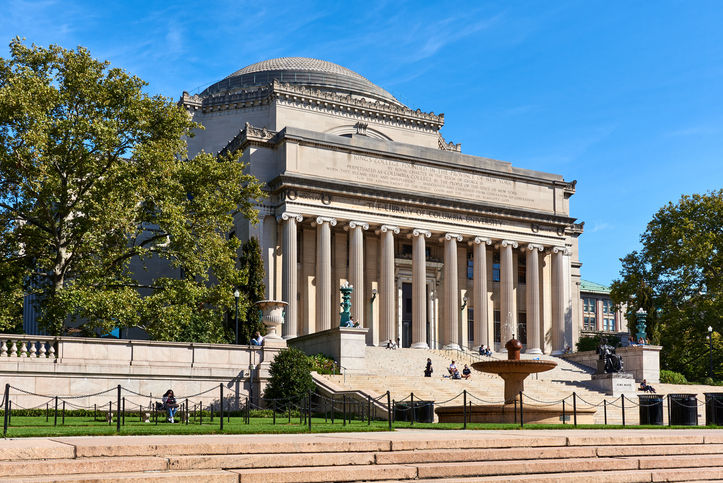
10. Columbia University, USA
Located in New York City, Columbia University is a leading private research university and Ivy League institution, enrolling around 34,000 undergraduate and graduate students across its schools. Founded in 1754, Columbia is particularly known for economics, political science, journalism, business, and biomedical research, as well as its distinctive Core Curriculum, which emphasizes critical reading, writing, and interdisciplinary thinking (as well as a swimming and fitness exam!).
Columbia’s academic strength is reinforced by its research output and global influence, with major contributions in areas such as public health, climate science, neuroscience, and international affairs. Its urban setting plays a central role in the student experience, offering unparalleled opportunities for internships, research partnerships, and professional networking. Admission is extremely competitive, with recent acceptance rates around 4%, placing Columbia among the most selective universities in the United States.
Alumni include Founding Father and statesman Alexander Hamilton, Nobel Prize–winning economist and monetary theorist Milton Friedman, aviation pioneer Amelia Earhart, and author J.D. Salinger.
Final Thoughts
The universities on our top 10 list represent the highest tier of global higher education, recognized for their academic excellence, research output, and long-standing influence across science, politics, culture, and industry. These institutions have shaped entire fields of study and continue to attract some of the most ambitious students from around the world. For many applicants, gaining a place at one of these prestigious universities offers access to exceptional academic resources, global networks, and long-term career opportunities.
That said, with acceptance rates averaging under 5%, competition is intense. Successful applicants typically demonstrate more than strong grades alone, showing academic depth, intellectual curiosity, and a commitment to meaningful activities beyond the classroom. While it’s worth aiming high, many other universities also offer outstanding education and career prospects. Not receiving an offer from a top-choice institution does not necessarily reflect a lack of ability, but rather the realities of an extraordinarily competitive admissions landscape in which only truly exceptional academic and extracurricular distinction separates applicants.

